What type of B2B content performs best?

Red neon speech bubble. Inside is a white neon heart shape similar to a social medial like button and beside it is a white neon zero. So the sign indicates zero likes.
Photo by Prateek Katyal on Unsplash

Which type of B2B content performs best was something I was asked recently, I guess because I put out content in different formats (written, video, carousels/sliders).

And, I work with clients on audio and events.

But it isn’t easy to answer because content analytics are complex and vary from platform to platform.

You will never know how many people read your online article all the way through, for example.

Some people might read a bit, some might skim-read, and some might click on the page and get distracted by something else.

It’s similar to a written LinkedIn post. A post will clock up ‘impressions’, but that doesn’t tell you if people have actually what you’ve written.

Impressions are the number of feeds your post has appeared in, not engagement.

The more likes/reactions your post gets, the more impressions it will likely get, but again it doesn’t mean people have actually read it.

Reacting without reading

*Shock warning* Some people hit react without reading the post or the whole post.

Video metrics are a little clearer.

Continue reading “What type of B2B content performs best?” →
What makes a clickable headline

A piece of paper in a type writer which has the word 'news' written at the top.
Photo by Markus Winkler on Unsplash

People will decide whether to click on a story or article based on the headline.

You could write a brilliant article, blog post or press release, but if the headline doesn’t ‘sell’ the content to your target audience, it won’t matter.

Think of all the headlines you scroll past vs what you click on to read.

Headlines are so important that some national newspapers and magazines have specialist writers called sub-editors to create them.

So what makes a clickable headline?

Different styles work for different types of content, but the key is creating some intrigue or tapping into an emotion or need.

Headlines also need to give enough information so that the reader knows what they’ll get from reading on.

Here are four headline examples and a breakdown of how they work:

1. Pique interest news headline

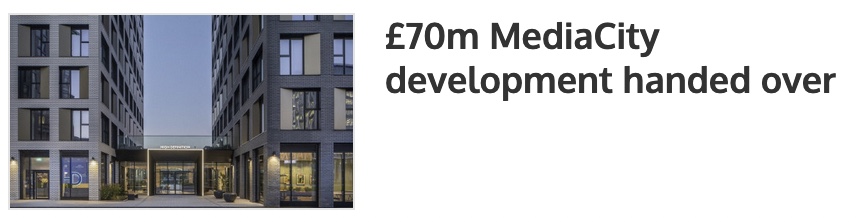
This headline, from the North West Business Insider, tells the reader enough, so they know what the story is about but leaves out certain information to help create curiosity.

It tells the reader that it is a development deal, the size of the deal and where it is. What it doesn’t say is who was involved in the deal, the type of development and the details of the transaction.

To find that information, the reader has to click through to the story.

News headlines are a balancing act. Reveal too much, and there is no reason to click through; reveal too little, and curiosity isn’t pricked.

2. Challenge or surprise headline

Presenting a statement in a headline that is incongruous with common thinking or trend is a great way of getting people clicking to read on.

This headline on a LinkedIn article by Daniel Paulusma creates different levels of intrigue depending on your views of hybrid working.

It appears to challenge the thinking of advocates of hybrid working, potentially highlighting something they’ve missed: Am I wrong? ‘What is the evidence?’

Continue reading “What makes a clickable headline” →

People in business: How to add personality to B2B content

“We want our content to have a bit more personality” is something I often hear from clients, but when they see copy that reflects the individual, it can make them nervous.

Photo by Tengyart on Unsplash

It reads as more conversational and less formal than the traditional B2B content you normally see.

The built environment sector I work in is frequently described as a people industry, yet you wouldn’t guess that from the content that is regularly published.

A lot of it sounds quite similar, as if following a particular rule book about how you write to sound professional and authoritative.

To reflect personality in your business content, that rule book needs to be ripped up. It will read a little differently, but it can help your target audience get to know you and the people in your business. It can make you more relatable and approachable.

And content that is a bit different is good in the noisy world of the internet and social media.

You don’t have to completely change how you write or sound like an Innocent smoothie advert. There are small, subtle ways to add a sprinkle of personality to your B2B content that will make a difference.

Whether you are writing your own content or writing it for someone in your business, here are four ways of adding personality:

1. Particular word choice

Start with choosing words and phrases you would use in a real conversation with a friend, family member or peer. If you would naturally say you were ‘chuffed’ or ‘over the moon’, write that.

If you are writing a piece for someone in your business, listen carefully to the words they use. I like to record content chats and get a transcript (Otter.ai is the tool I use).

Are there any particular words or phrases they use? How do they explain their viewpoint or describe something when chatting about it?

Use these in the copy so that it sounds authentic to them.

A simple example is someone who works in the healthcare sector using the word ‘poorly’ rather than ‘sick’ to describe patients using a facility.

Continue reading “People in business: How to add personality to B2B content” →

How to get your LinkedIn activity growing your business

Can LinkedIn be a low-cost marketing tool for B2B businesses?

Ayo Abbas, who hosts the Built Environment Marketing Show podcast recently invited me as a guest to talk about how to get your LinkedIn activity firing on all cylinders.

Ayo Abbas and Stacey Meadwell about to go live on LinkedIn to talk about…LinkedIn

Among the points we discussed were whether LinkedIn can help you grow your business, the best approach to get traction and what to post about.

It was recorded as a Livestream on LinkedIn, and you can watch the video replay below, or it will be available as a podcast on 21 October 2022.

Continue reading “How to get your LinkedIn activity growing your business” →

How to make industry awards worth entering, without actually winning

In the latest, It’s a B2B Comms Thing LinkedIn Live stream, Ayo Abbas, Emma Drake and I spotlight industry awards and the value of entering.

It takes a lot of time to pull together a good awards entry, and there may be entry fees or the cost of a table at the ceremony on top, which can make it pricey.

It’s A B2B Comms Thing LinkedIn Live stream on getting value from awards

So we talked about how worthwhile it is to enter an award, whether you can make the most even if your name, company or project doesn’t get called out on the night.

Why and when should you enter an industry award?

Emma: The first thing is timing; make sure you’ve got something really compelling, and it fits with your timing as a business.

Have a broad range of things that you’re looking at, whether it’s your product, your service, your campaign or your business. But it has to be really special, it has to really stand out.

You have to do research and have a lot of facts. There’s quite a lot of work that goes into writing that award, so make sure that time spent is worthwhile.

Ayo: Does it fit into your overall campaign objectives? You have to ask: Is this project going to help propel us where we want to go? So there has to be a reason why you’re entering.

But also, I have used award entries as a way to get our story straight. It’s a test bed, it forces you to answer those questions and get the basics. And that can be a good hook, even if you don’t win.

Continue reading “How to make industry awards worth entering, without actually winning” →